Do the science inside Moodle™
AI Science Experiment turns a teacher's brief into an interactive experiment students explore, measure and report on. Students predict, collect evidence and explain what happened.
Supported: Moodle™ 4.5 LTS, 5.0, 5.1, 5.2 and 5.3. Tested on Moodle™ 4.5.15+, 5.2.4+ and 5.3+.
Built for primary and secondary science, from Foundation to Year 12.
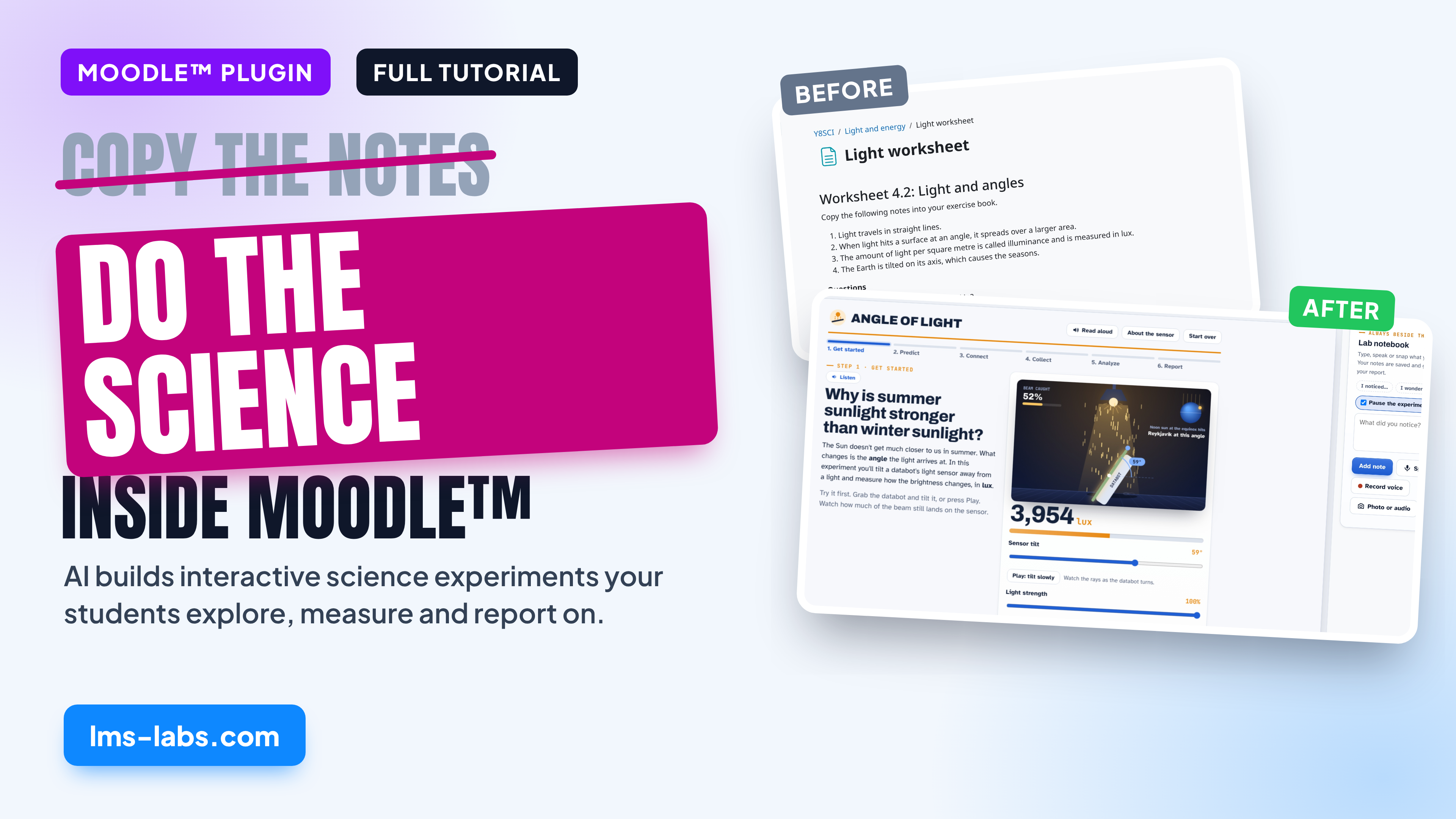
Full tutorial · 9:45
See the complete teacher and student workflow
Jump to a chapter
Download chapter listShort reel · 36 seconds
A quick look inside the activity
The vertical reel is served from the same versioned media store as the full tutorial.
Release notes · v1.3.6
Cleaner checks and a smoother saved-edit flow
- AMD JavaScript now passes Moodle's strict lint checks with zero warnings.
- Promise handling and conditional logic are clearer and safer.
- After saving an edit, Preview and Publish are first and scroll into view.
From brief to evidence
A complete science learning cycle
Science students can test
Students change variables, take measurements and explain patterns from evidence instead of copying notes.
Ready-made or curriculum-led
Start with four science-checked experiments or create a new investigation from the teacher's curriculum brief.
A clear inquiry routine
Explore, predict, connect, collect, analyse and report, with checkpoints, challenges and a lab notebook.
Twelve checks before publishing
Automated safety and learning checks help teachers review an AI-built experiment before it reaches students.
Accessible lab notebook
Students can add typed, spoken, voice or photo notes and use read-aloud support while they work.
Teacher-controlled publishing
Review automated checks, edit and preview each version, then choose when it reaches students.
Pricing
One-time site unlock
US$5 / 50 credits
The 50-credit unlock is one-time. AI operations use the site's shared LMS Labs credits.
Ready-made experiments and built-in marking use no AI credits. Failed AI requests are not charged.
Inside the activity
Student evidence and teacher insight
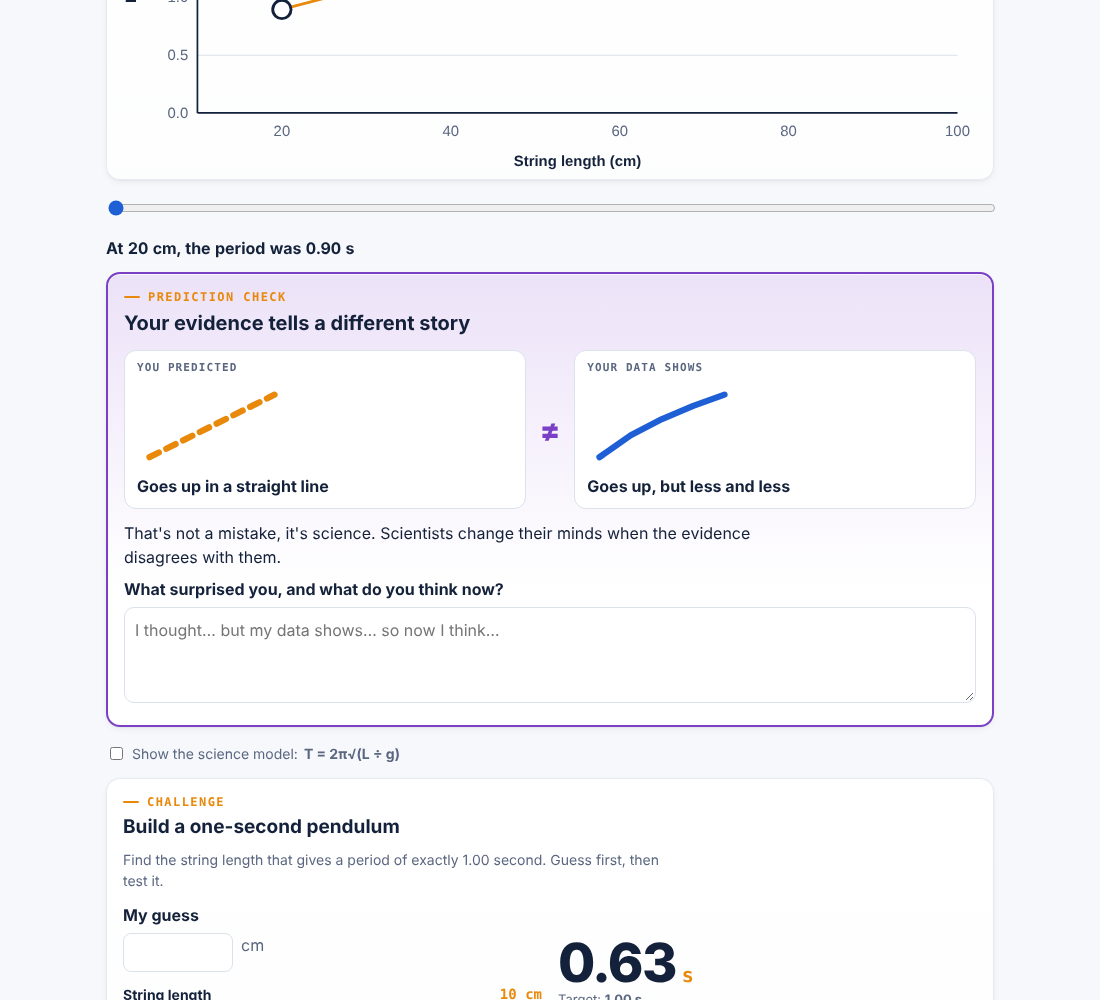
Prediction check
Students compare their first idea with the measured result.
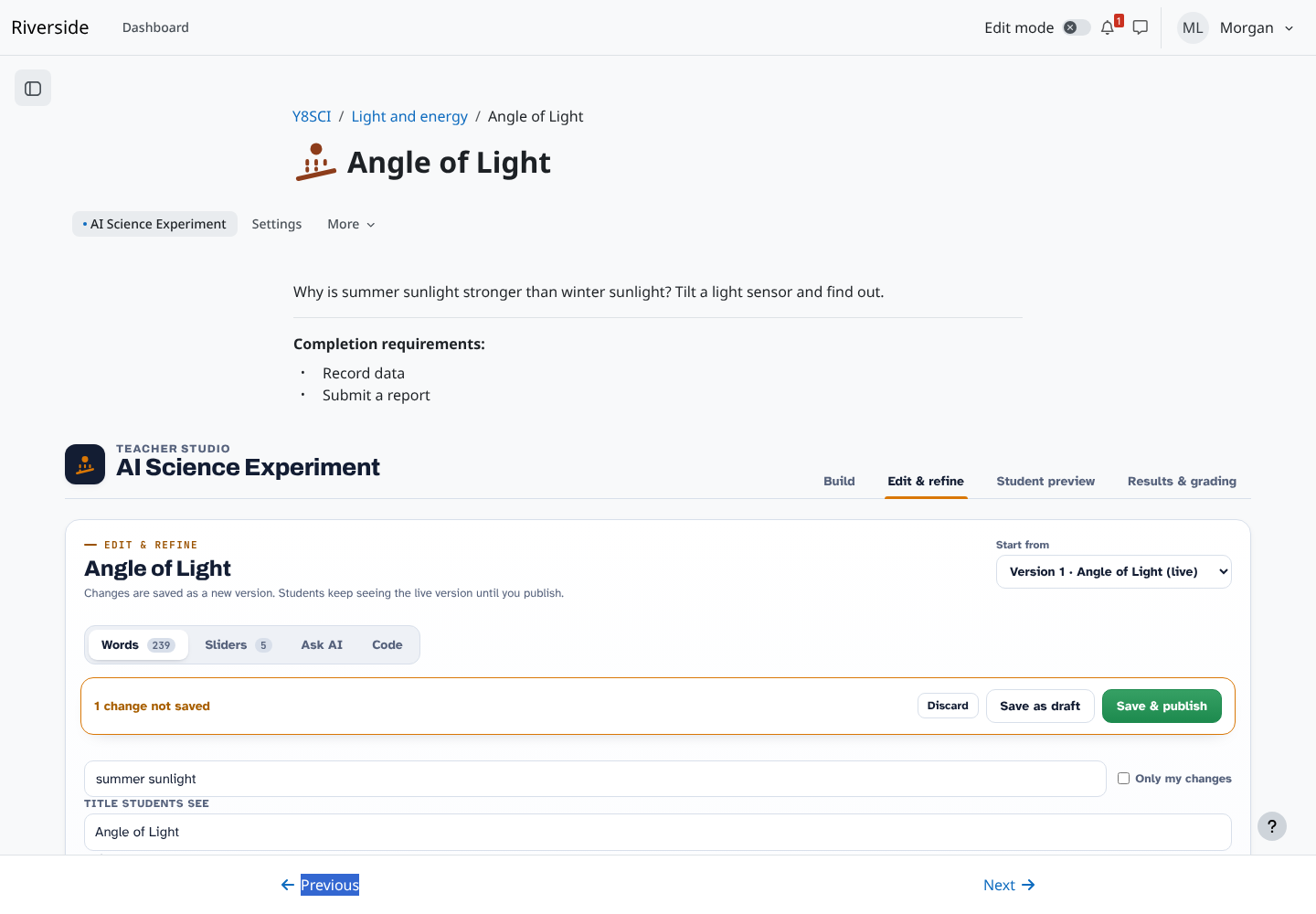
Edit and refine
Teachers adjust wording, sliders and experiment versions.
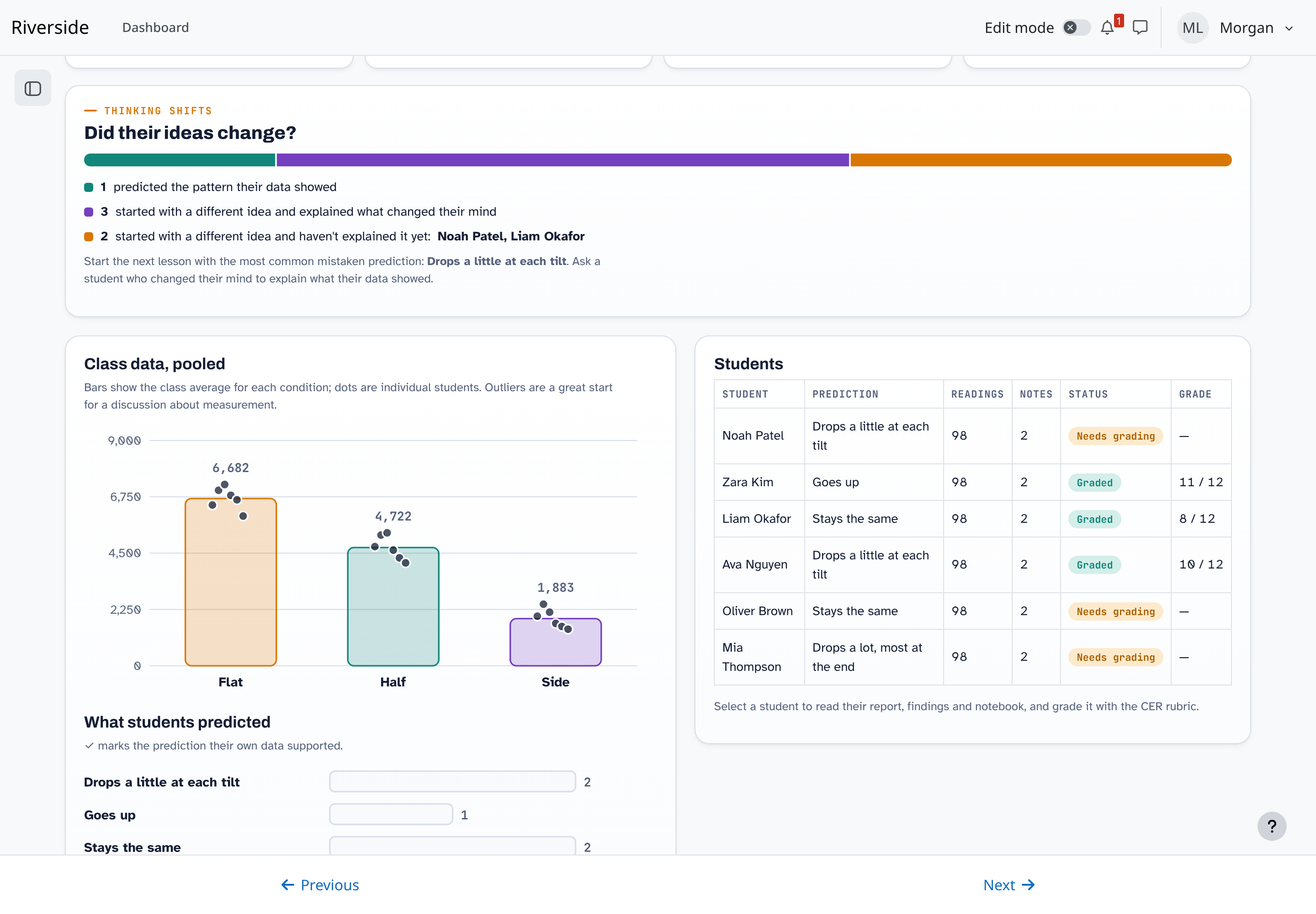
Thinking shifts
Teachers see class patterns and decide what to reteach.